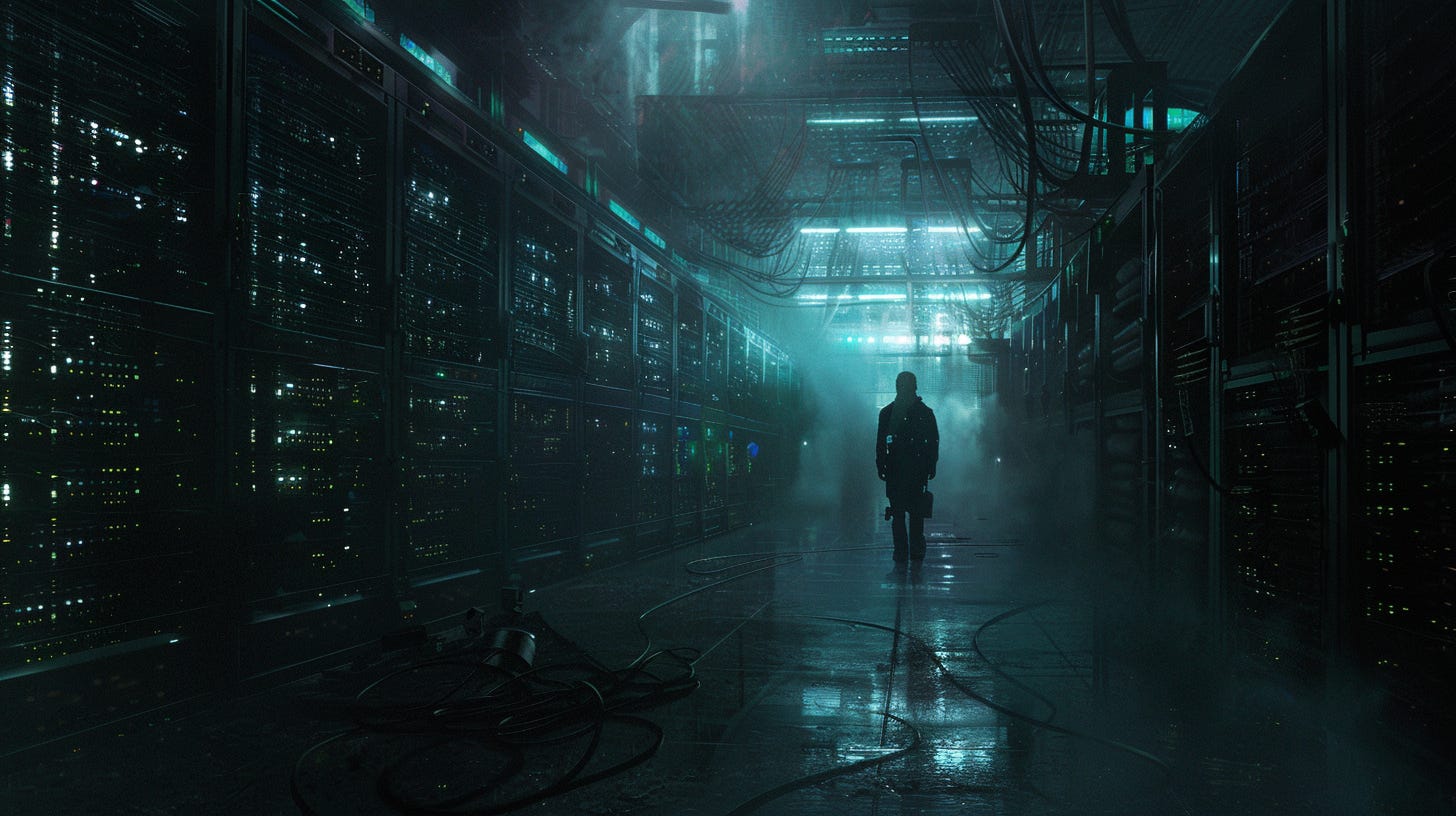
This pattern has been building since 2018. Somewhere in the last few months, it became impossible to ignore.
A Google engineer signs a petition. Then another. Then four thousand of them. They’re protesting Project Maven — a contract that fed AI‑assisted targeting intelligence to drone operations. Some quit rather than keep working on it. The company eventually lets the contract expire. But it quietly drifts back toward Pentagon relationships anyway.
Fast forward to 2026. Anthropic, the company founded explicitly on the promise that AI safety comes first, is in a standoff with the U.S. Department of Defense. The Pentagon wants Anthropic to drop the part of its safety pledge that restricts Claude from being used for surveillance and weapons applications without meaningful human oversight. When Anthropic resists, the DoD threatens to use the Defense Production Act and blacklist the company from federal systems entirely. Under that pressure, Anthropic quietly rewrites its flagship safety pledge.
OpenAI signs a classified‑network deal with the Pentagon. Days later, Caitlin Kalinowski — the head of OpenAI’s robotics division — resigns. Her stated concerns: warrantless surveillance of Americans and AI embedded in lethal autonomous systems without adequate human control.
Thirteen Palantir employees quit over the company’s role in autonomous weapons and surveillance work. Anthropic’s own staff push back internally on the Pentagon pressure. OpenAI whistleblowers raise alarms about alignment and oversight.
Look at that list again. These aren’t activists outside the gates with placards. These are senior engineers, division heads, and technical leads — people with stock grants, clearances, and career trajectories at stake — walking away from all of it to say the same thing: the machine is being wired straight into war and control systems, and the people nominally in charge don’t have the brakes in their hands.
That is not a pattern you explain by accident, or by coincidence, or by the personality traits of people who happen to have a conscience. It is a structural signal. And reading it correctly changes everything that follows.
Accessibility Explainer
On why the people most likely to stop AI from eating democratic governance are the ones walking away from their careers to say so out loud.
This essay is dense by design. The audio and video below are accessibility layers — the same structural argument presented as a discussion, for those who prefer listening or watching over reading. Generated with Google’s NotebookLM.
🎬 Watch
🎧 Listen

This Is Not a Tech Story
I want to be precise about what this is and isn’t.
It is not a story about AI going rogue. It is not a science fiction plot. There is no robot uprising. There is no runaway superintelligence making its own decisions.
What there is, is something more mundane and more dangerous: a small number of humans inside defence agencies, intelligence services, and corporate boardrooms making deliberate decisions to integrate the most powerful cognitive tools ever built into targeting systems, surveillance infrastructure, and governance machinery — faster than any democratic institution has been asked to weigh in, and mostly behind closed doors.
The engineers hitting the alarm aren’t worried about the AI. They’re worried about the humans using the AI. Specifically: humans in positions of power who are systematically removing every friction point, every constraint, every ethical guardrail that slows down the integration of these systems into decisions that used to require human accountability.
That’s not a tech story. That’s a power story.
The way to read it correctly is as a conscience signal — a recurring, documented pattern in which individuals inside these systems are forced to surface a concern that every formal accountability mechanism above them failed to catch. That is not a heroism story. That is a diagnostic. When the engineers are the last line of defence, the question isn’t about the engineers. It’s about everything that should have been in place before it got to them.
The Guardrails Were Never Load-Bearing
When companies like Anthropic or OpenAI publish “safety policies” and “responsible scaling frameworks,” the implicit message to the public is: we have this under control, there are rules, someone is watching.
But look at what actually happens when those guardrails get tested.
The Pentagon wanted Anthropic to agree that Claude could be used for “all lawful purposes” — a phrase that sounds innocuous until you understand that “lawful” inside the U.S. national security apparatus includes mass surveillance conducted under classified executive orders, targeting decisions made by algorithms, and a definition of “human oversight” that can mean one person monitoring thousands of automated outputs per hour.
Anthropic’s safety pledge didn’t hold. It got rewritten. Not because the safety concerns disappeared. Because a client with enormous leverage and a legal threat demanded it.
OpenAI’s red lines around domestic surveillance — explicit written commitments not to enable warrantless monitoring of Americans — are now being called into question by legal scholars and former employees who point out that FISA, Executive Order 12333, and classified intelligence programs create massive carve‑outs that standard corporate policy language simply doesn’t cover.
This is the load-bearing test — and it is the only test that matters. A guardrail that holds when nothing is pushing against it is not a guardrail. It is a statement of intent. The question is always: what happens when a sufficiently powerful actor applies pressure? Here, we have the answer, documented in real time. The pledges were rewritten. The red lines were blurred. The safety language survived internal consensus but could not survive external leverage.
Now ask the obvious next question: why did no external institution stop this?
Here is the regulatory picture as it actually stands.
There is no binding law in the United States that specifies what an AI company must or must not allow a defence contractor or intelligence agency to do with its models. There is no independent inspection body with the authority and technical expertise to audit whether AI models deployed in targeting or surveillance roles are doing what their safety policies claim — or what their contracts now permit.
What exists instead is a set of voluntary frameworks: company‑authored “responsible AI” policies, industry‑association guidelines, government-convened “AI safety institutes” that produce benchmarks and best‑practice documents — all of which are written by the same actors who benefit from not being regulated, and none of which have the force of law.
The EU AI Act is the most serious legislative attempt so far. It does create mandatory requirements for high‑risk AI systems. But it has broad carve‑outs for national security and defence — exactly the domain where the most consequential deployments are happening. The legislation stops precisely where the problem begins.
In practice, the question of whether an AI model should be used to assist in lethal targeting, or to score civilian populations for risk, or to flag individuals for watchlists, is being decided in private meetings between defence officials and a handful of CEOs. Not in parliaments. Not in courts. Not by voters.
This is not a gap waiting to be filled. It is the architecture. The voluntary layer was never designed to hold against a client with a legal threat and a national security mandate. It was designed for conditions where everyone broadly agrees, and no one is pushing hard. Those conditions don’t describe the defence and intelligence contracting environment. They never did. Building a safety governance structure on voluntary frameworks and then exempting national security from the parts that have teeth is not an oversight. It is a choice.
The guardrails are not load‑bearing. They are marketing copy with escape hatches built in for exactly the actors who are now using them.
The Vendor Problem Nobody Talks About
There’s a structural problem underneath all of this that makes the regulatory gap even worse.
When a company like Palantir embeds its operational AI platform into a military’s command systems, or a police department’s crime prediction workflow, or a national border authority’s risk‑scoring pipeline — the integration goes deep. Databases are restructured around the platform’s data model. Workflows are rebuilt to consume its outputs. Staff are trained to interpret its recommendations. Institutional knowledge migrates into the vendor’s stack.
At that point, the theoretical ability of a government to “turn it off” or “change the parameters” runs into the reality that nobody inside the institution fully understands the stack anymore. Updates happen behind NDAs. Model changes arrive as software patches. The vendor’s technical staff are the only people who know how the system actually works.
This is not unique to Palantir. It is the standard trajectory for any deeply integrated enterprise software. What makes it different here is that the outputs are feeding into decisions about who gets flagged, who gets detained, who gets targeted, who gets credit, who gets benefits — and the institution nominally responsible for those decisions has quietly outsourced the reasoning to a system it cannot fully inspect or contest.
What this produces is not just a dependency problem. It is a structural transfer of accountability. The elected official, the ministry, the police commissioner — whoever nominally holds responsibility for a decision — no longer controls the reasoning that produces it. That reasoning lives in a proprietary stack, behind NDAs, updated by engineers who answer to a private company, not a public mandate. Democratic oversight of the outcome is meaningless if there is no democratic access to the process. And there is none. The institution can review outputs. It cannot interrogate the model. It cannot contest the weighting. It cannot — in any meaningful sense — govern what it has become dependent on.
This is where the conscience signal, introduced earlier, compounds. When an engineer inside one of these companies walks away over concerns about how the system will be used, they are not just worried about what their employer will do. They are worried about what the institutions consuming their work will be unable to undo. The stack, once embedded, doesn’t respond to political will. It responds to contract terms and software updates issued by people who were never elected and never will be.
Vendor lock‑in in a procurement context is an annoyance. Vendor lock‑in in the governance of human life is something else entirely.
What the Insiders Are Actually Telling Us
When you read the resignation letters and whistleblower accounts from inside these companies, a consistent picture emerges.
These people are not anti-technology. They are not naive about national security. Many of them built the systems they’re now walking away from. What they’re saying, in various ways, is this:
The pace of integration is outrunning any accountability structure we have. The safety language is real inside the company but has no mechanism for enforcement when a sufficiently powerful actor demands an exception. The people making the final calls about how these systems get deployed don’t fully understand what they’re deploying. And once the systems are embedded, the window for democratic oversight closes.
That last part matters most. The stack hardens. Once AI is embedded in military command chains, police prediction systems, border risk scoring, and financial surveillance infrastructure, rolling it back requires dismantling institutional dependencies that governments have organised themselves around. The window for meaningful democratic input is not infinite. It is open now, narrowing fast, and almost no one with formal political power is moving quickly enough to use it.
This is the conscience signal doing its diagnostic work. Each departure is a data point. Each resignation letter is a document of institutional failure — not the failure of the individual leaving, but the failure of every formal mechanism that should have surfaced the concern before it came down to a personal choice between career and conscience. The signal doesn’t tell us that these people are heroes. It tells us that the system has no other way of producing the alarm.
But there is something underneath the conscience signal that the departure pattern itself generates — something that operates in the opposite direction, quietly, without anyone naming it.
There is a filter running here that nobody is talking about.
Every engineer, division head, and technical lead who walks out over moral concerns about where this is going leaves behind a workforce that, by definition, either does not share those concerns — or has decided not to act on them. That is not a neutral outcome. Mass resignations over ethics do not slow the machine. They purify it. What remains is a development team selected, in part, for its willingness to proceed.
This is not a one-time effect. It compounds. Each departure cycle — each contract renewal, each escalation of scope, each new application of the system to a more consequential domain — runs the same selection process again. The people who find the next threshold unacceptable leave. The people who don’t, stay. Over time, the workforce isn’t just willing to proceed. It has been progressively refined, through repeated self-selection, into a group for whom proceeding is the default.
What the conscience signal tells us about the people who leave, the filter tells us about the people who don’t: the machine doesn’t just continue. It continues with a workforce that has been shaped by the cumulative exit of everyone who wouldn’t. That is not a personnel problem. It is a structural one. It means the internal cultural check — the last informal accountability mechanism after the formal ones have failed — degrades over time, systematically, as a direct consequence of the conscience signal operating without any formal system to absorb what it’s transmitting.
This is where the full picture becomes visible. The conscience signal is the symptom. The filter is the mechanism. And the vendor lock-in documented in the previous section is the reason none of it is recoverable through ordinary political will — because by the time the filter has done its work, the institutions consuming the output are no longer capable of contesting the system they’ve become dependent on.
The insiders are not telling us they failed. They are telling us, as precisely as they can, that the structure failed before it ever got to them.
The Rebels Are Not the Story — We Are
It’s easy to frame the insiders as heroes and move on. That’s not the point.
The point is that a healthy democratic society should not depend on individual acts of conscience by well-paid engineers to constitute its AI oversight system. The fact that we do — right now, today — is a civilisational embarrassment and a serious warning.
Before the argument goes further, it should answer the objection directly: aren’t these resignations proof the system is working? People raised concerns, they went public, we know about them — isn’t that accountability?
No. It is the appearance of accountability without the structure. What the conscience signal tells us is that a concern reached the public because an individual made a costly personal decision to surface it — not because any institution was designed to catch it. Four thousand Google employees petitioning against drone AI means the Pentagon contracting process had no mechanism to surface that concern before four thousand people had to. Caitlin Kalinowski resigning over surveillance and lethal autonomy means OpenAI’s governance structure had no internal path to force that question to resolution. Anthropic staff pushing back on Pentagon demands means the company’s own safety architecture couldn’t hold the line when commercial and political pressure hit. A system that only surfaces a concern when someone is willing to pay the personal cost of surfacing it is not a system with accountability. It is a system that outsources accountability to individuals and calls it heroism.
None of those people should have had to make the choice they made. Those choices should have been made by accountable public institutions with the mandate, authority, and technical competence to make them.
They weren’t. They aren’t. Not yet.
And here is what the filter argument means for this conclusion: the people walking away from these companies are, right now, doing more meaningful AI governance than any government institution on earth. That is not a compliment to the people leaving. It is an indictment of everything that should have made their departure unnecessary. Because we also know what their departure does. It doesn’t stop the machine. It refines it. The workforce left behind is, by that mechanism, progressively less likely to produce the next conscience signal. The window doesn’t just close from the institutional side. It closes from the inside too.
What you can do right now — before this hardens further — is name the pattern, demand the mechanism, and refuse the narrative that says this is too complex for democratic input. It is not. The questions are precise.
Should AI be embedded in lethal targeting systems without a legally binding requirement for meaningful human accountability at every decision point — not a contractual definition of “human oversight” that can mean one person monitoring thousands of outputs per hour?
Should civilian surveillance infrastructure be built on AI models whose safety policies can be rewritten under contract pressure by the same actors they’re supposed to constrain?
Should any vendor be permitted to become structurally indispensable to the governance of human life — to the point where the institution nominally responsible for the decision can no longer inspect, contest, or remove the reasoning behind it — without democratic oversight of what the system actually does?
The mechanism is binding law with inspection authority — applied to AI deployments in defence and national security, the one domain every existing framework specifically exempts. That is the gap. Naming it is not complexity. It is a specific, articulable demand that any elected representative can be asked to make.
Those are not technical questions. They are political questions. And right now, the only people answering them publicly are the ones walking away from their careers to do it.
That should bother all of us a great deal more than it does.